
· ARUM Team · Product Guide
How to Tell a Good LED Strip From a Bad One — A Buyer's Checklist
What separates a good LED strip from a cheap one? This guide covers the practical checkpoints to inspect before buying — chip and PCB quality, CRI, IP rating, power supply, and warranty — so you do not have to replace it in a few months.
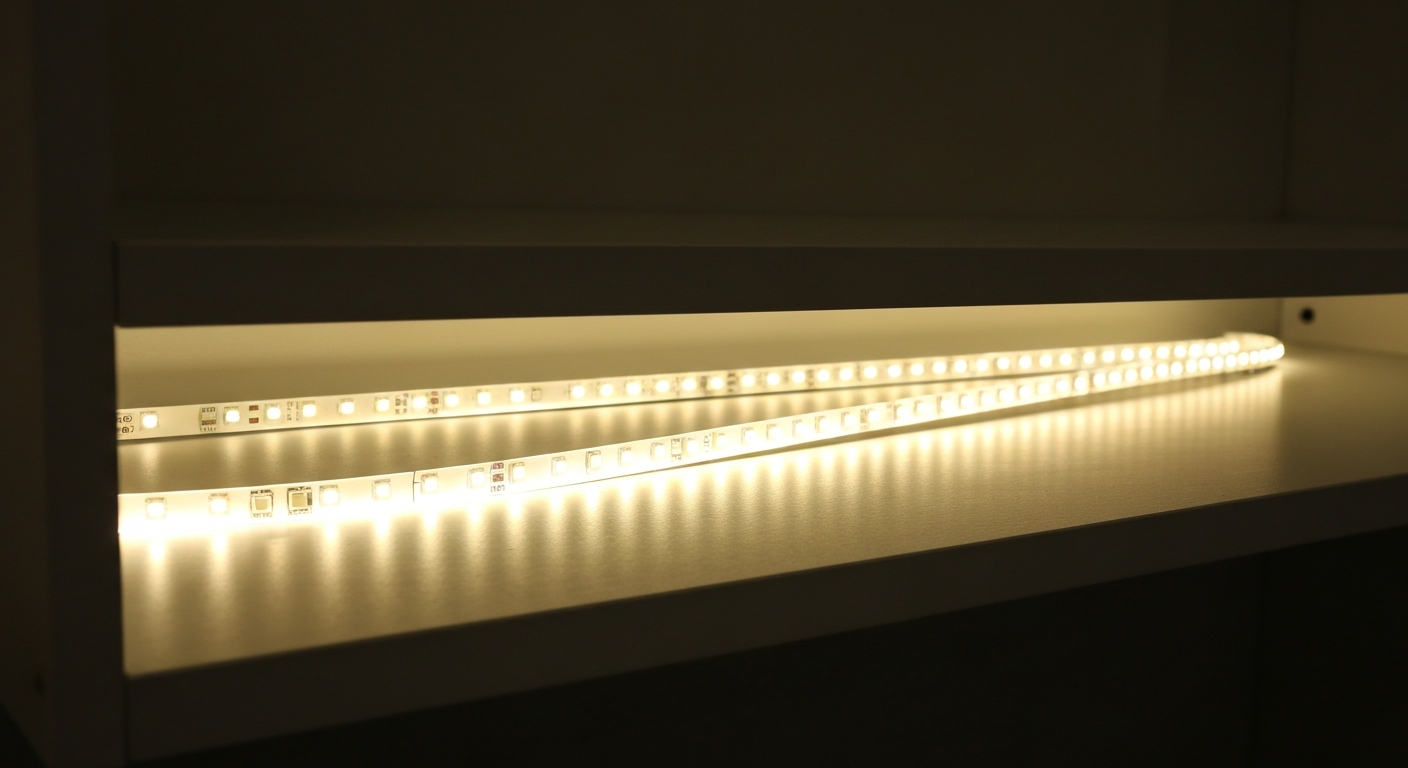
Many people buy the cheapest LED strip they can find, install it, and within a few months run into problems — uneven color, dead spots, or light that starts turning yellow for no reason. They end up tearing out the whole run and replacing it. Most of this is avoidable if you know what to check before you buy.
LED strips look nearly identical from the outside across brands, but the quality inside can vary enormously. Here are the checkpoints that actually matter.
Why LED Strips Vary So Much in Quality Despite Looking the Same
Most of the cost difference between LED strips comes down to three things you can’t see at a glance: the quality of the LED chips themselves, the quality of the PCB board they sit on, and the current-control standard used internally. Cheap strips almost always cut costs here first, because buyers can’t see the difference until the strip has been running for a while.
What to Actually Check Before Buying
1. Color Consistency
A quality LED strip delivers even color across its entire length, with no spots that look more yellow or more white than the rest. If possible, ask for a video or review showing the strip lit up, and compare it against the listed CCT. Read more in our Color Temperature Guide.
2. PCB Quality and Soldering
Flip the strip over and look at the back. A good strip has an evenly thick PCB with clean, consistent soldering at each LED chip — no smeared solder or thin copper traces that would cause voltage drop too quickly over a long run.
3. CRI (Color Rendering Index)
A high CRI (90+) means colors under the light look closer to natural daylight. Cheap strips often don’t list a CRI at all, or only give a vague range without a real number. For spots where color accuracy matters — like a product display wall — insist on a strip with a clearly stated CRI.
4. Does the IP Rating Actually Hold Up?
Some cheap strips are labeled IP65 without any real silicone coating behind the label. Moisture gets in quickly and the circuit fails. Buy from a supplier that can show you the actual coating and backs up the rating with real standards. See our IP Rating Guide for details.
5. The Power Supply and Driver That Come With It
A quality LED strip is usually paired with a power supply built to handle current surges and includes overcurrent protection. Cheap bundled adapters usually skip this protection entirely, which shortens the lifespan of the strip itself.
6. Warranty and After-Sales Support
Suppliers selling genuinely good product are usually confident enough to offer a 1-2 year warranty with clear after-sales support. If a seller doesn’t mention any warranty, or is vague about it, treat that as a warning sign.
Good LED Strip vs. Low-Quality LED Strip
| Checkpoint | Good Quality | Low Quality |
|---|---|---|
| Color across the run | Even and consistent | Uneven yellow/white spots |
| PCB and soldering | Clean, evenly thick | Thin, messy solder joints |
| CRI | Clearly stated, 90+ | Not listed, or vague |
| IP Rating | Real coating standard | Label only, no real coating |
| Power supply | Overcurrent protection built in | Basic adapter, no protection |
| Warranty | Clear, 1-2 years or more | Not stated, or very short |
What Lifespan Should You Expect?
A quality LED strip used correctly should last 30,000-50,000 hours without needing replacement (roughly 8-10 years at 8-10 hours of daily use). A low-quality strip can fail at half that or worse. Read more in our LED Strip Lifespan Guide.
Summary
Next time you shop for an LED strip, don’t judge by price alone — check color consistency, PCB quality, CRI, real IP rating, the power supply it ships with, and the warranty offered. These are exactly what separates a strip that lasts for years from one you’ll be replacing within months.
Browse LED strips that meet every one of these standards on our ARUM Products page, or contact the ARUM team for advice before you buy.