
· ARUM Team · Interior & Design
LED Strip for Prayer Rooms and Home Altars — How to Get a Calm, Balanced Glow
LED strip lighting for a prayer room or home altar needs to feel calm yet still show every detail clearly. This guide covers color temperature, mounting positions, and cable-hiding tips for a serene, tidy altar corner.
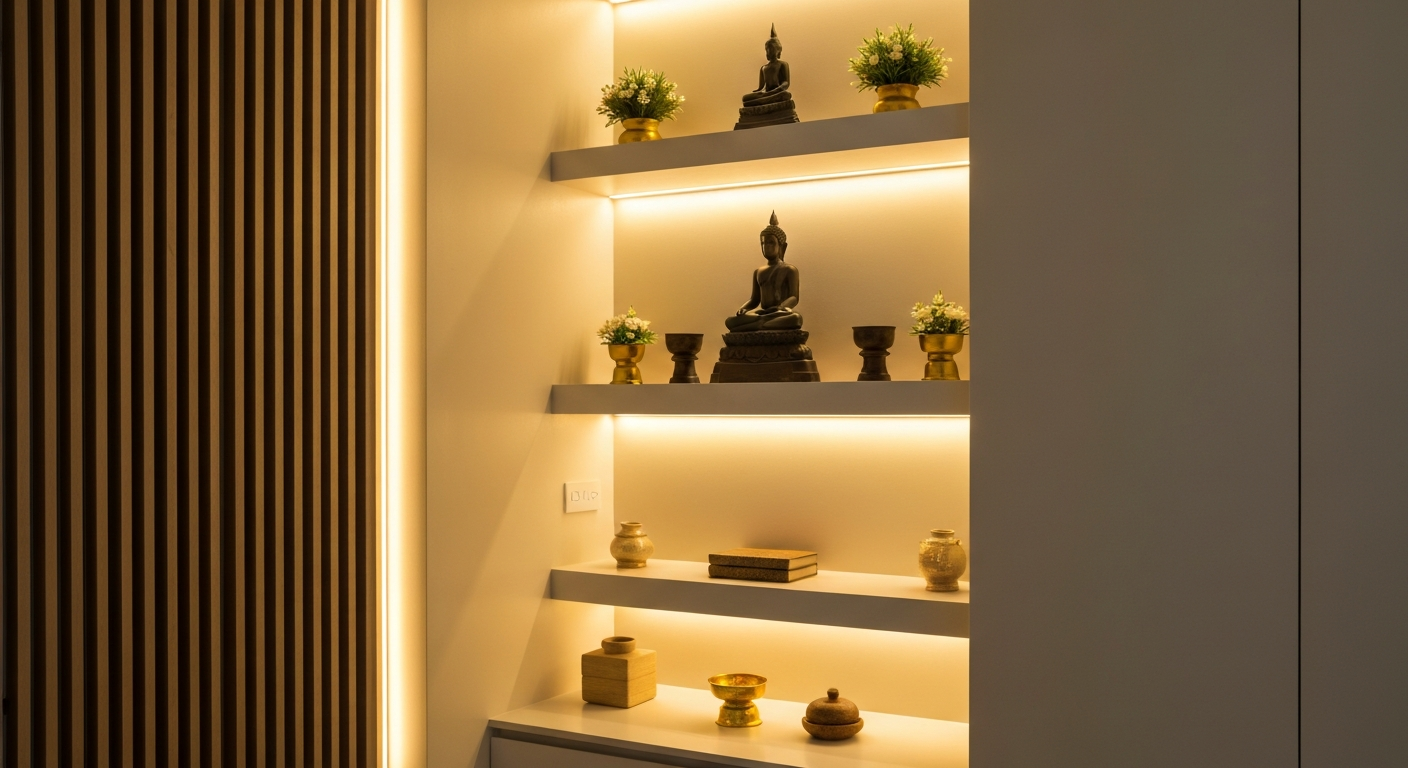
Many homes have a small altar corner or a dedicated prayer room lit by a single overhead bulb — either too harsh and clinical, or too dim to see the Buddha image and offerings clearly. Neither extreme suits a space that’s meant to feel like the calmest corner of the house.
LED strip lighting is a better fit for prayer rooms than a standard bulb, because it produces soft, even light, hides easily out of sight, and can be tuned to exactly the mood you want. This guide walks through how to choose and install LED strips specifically for a prayer room or home altar.
Why a Prayer Room Needs Different Lighting
A prayer room isn’t a functional space like a kitchen or living room. The lighting goals here are different:
- Create a calm, relaxed atmosphere suited to chanting and meditation
- Show the details of the Buddha image and offerings clearly, without leaving them in shadow
- Avoid harsh glare that distracts during long periods of sitting
LED strips meet all three goals better than a single bulb, because they can be run in continuous lines and dimmed far more precisely.
Choosing the Right Color Temperature
Warm White (2700K–3000K) — Most Recommended
Warm-toned light feels calm and comforting — ideal for chanting and meditation. This is the most common choice for altar corners in Thai homes.
Neutral White (3500K–4000K) — For Larger Dedicated Rooms
If the prayer room is a separate, larger space used for reading chants or scripture, this tone makes text easier to read while still avoiding harshness.
Avoid Cool White (5000K and above)
Cool-toned light feels clinical and formal — not suited to the warmth and calm a prayer space calls for.
Read more on choosing color temperature: LED Strip Color Temperature (CCT) Guide
Where to Install LED Strips in a Prayer Room
1. Behind the Altar Base (Backlight)
Mount the strip behind the base or shelf of the altar so light spills out as a soft halo around the Buddha image.
Benefits:
- Creates a natural focal point that highlights the image gently
- No glare shining directly into the eyes
- The strip itself stays fully hidden, keeping the altar tidy
2. Along the Top Edge of the Altar Shelf
Mount the strip along the top edge of the altar cabinet or shelf so light washes down over the whole surface.
Best for: Altars with multiple offerings where every item needs to be visible.
3. Hidden in a Ceiling Cove Above the Altar Corner
For a dedicated prayer room, hiding the strip in a ceiling cove above the altar corner spreads soft, even light across the whole room without any single bright point.
Read more on this technique: What Is Cove Lighting and How to Do It Right
Which LED Strip Type to Choose
COB LED Strip — Most Recommended
- Smooth, even light with no visible individual LED dots — ideal for a calm atmosphere
- No hotspots to distract the eye
- Wide range of Warm White 2700K–3000K options available
Dimmable SMD LED Strip — Budget-Friendly Option
If budget is limited, a dimmable SMD strip works fine — just choose a higher LED density (120 LEDs/m or more) so the light stays even rather than dotted.
Recommended Brightness
A prayer room doesn’t need much brightness — softness matters more than intensity.
| Location | Recommended W/m |
|---|---|
| Behind the altar base (backlight) | 3–5 W/m |
| Top edge of the altar shelf | 5–7 W/m |
| Ceiling cove in a dedicated prayer room | 6–8 W/m |
Tip: Start low and add more only if needed — a prayer room calls for just-right light, not maximum brightness.
Dimmers — Worth Having in a Prayer Room
A dimmer lets you adjust brightness to match the time of day and activity.
- Morning prayer before work — 60–80% brightness for clear visibility
- Evening chanting or meditation — dim to 20–40% for a calm, settled mood
Read more on choosing a dimmer: LED Strip Dimmers — Types and How to Choose
Cable-Hiding Tips for a Tidy Altar Corner
A well-finished altar corner should never show stray wiring.
- Use an aluminum channel with a diffuser behind the altar base — it hides the strip and softens the light at the same time.
- Route cables through the wall or behind the altar shelf — for built-in altars, have the installer channel the wiring in during construction.
- Keep the power supply out of sight, such as inside a side cabinet or under the altar base, so no visible box breaks the clean look of the space.
Summary: What a Good Prayer Room LED Setup Needs
| Key Factor | Recommendation |
|---|---|
| Color Temperature | 2700K–3000K Warm White |
| LED Type | COB recommended, dimmable SMD also works |
| Main Position | Behind the altar base (backlight) |
| Brightness | 3–5 W/m, soft rather than bright |
| Dimmer | Recommended for every setup |
A well-lit prayer room isn’t just about appearance — it helps everyday chanting and meditation feel calmer and more settled.
Explore Warm White LED strips and complete accessory sets for prayer rooms at Arum’s product page or contact the Arum team for a lighting design tailored to your altar corner.