
· ARUM Team · Product Guide
LED Aluminum Channel Types Compared — Surface, Recessed, and Corner
Compare the three main types of LED aluminum channels — surface mount, recessed, and corner — and find out which is right for your installation.
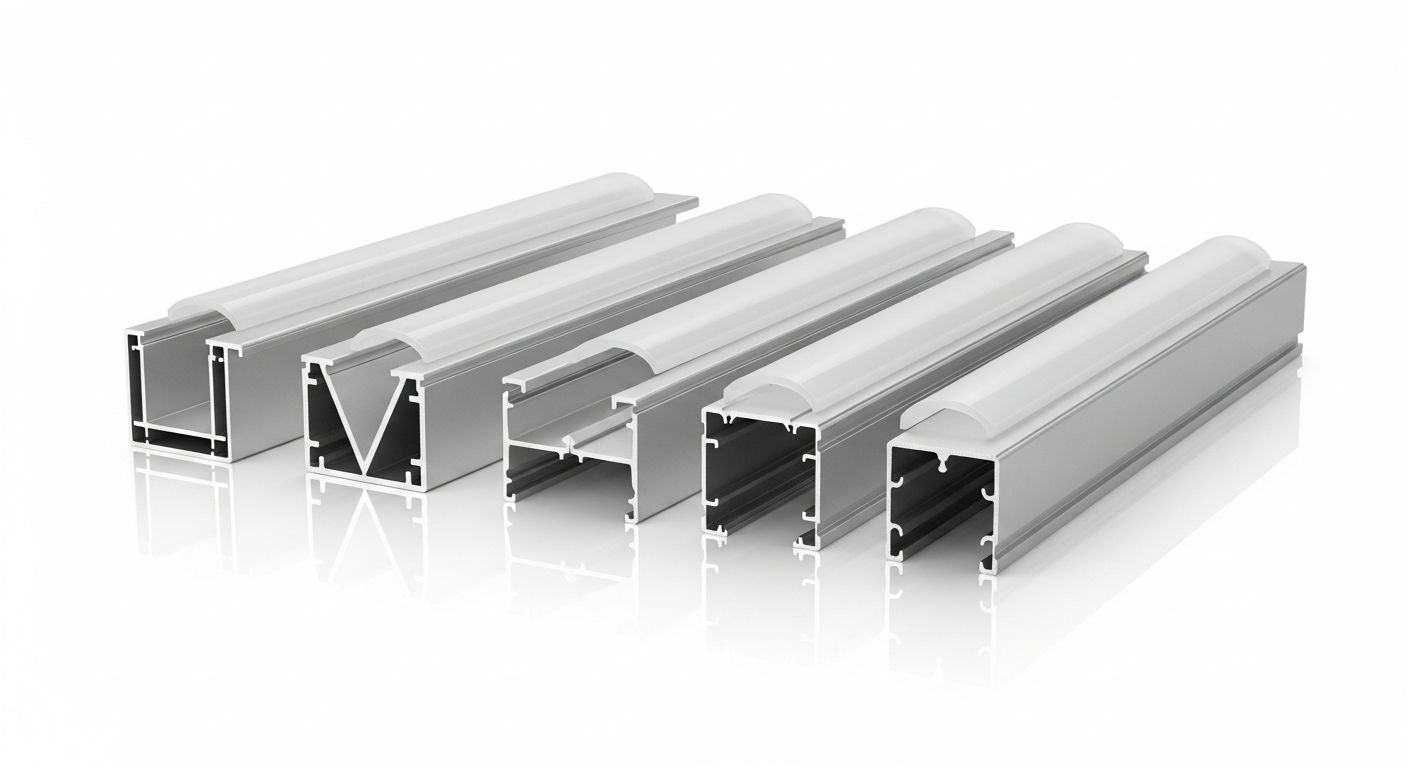
What Makes Aluminum Channels Different from Each Other
LED aluminum channels share the same fundamental function — hold and protect LED strips while conducting heat — but they differ in shape and mounting method. These differences affect both the final light output and the aesthetic quality of the installation.
Surface mount channels are the most common type. They mount directly onto a wall or ceiling surface with screws, making installation fast and straightforward. Ideal when speed and convenience matter.
Recessed channels are designed to sit flush inside a pre-cut groove in the wall, ceiling, or furniture surface. The strip is effectively invisible — only light is visible. A cleaner, more premium look, but requires advance planning to cut the groove before installation.
Corner 45°/60° channels are designed specifically for mounting at the junction between wall and ceiling, or at other angular transitions. Their geometry reflects light in two directions simultaneously, making them particularly suited to cove lighting and accent effects.
Pros and Cons of Each Type
Surface Mount Channel
Pros: Easiest to install; no wall preparation needed; lower cost; easily changed or repositioned Cons: The channel itself is visible; lacks the built-in appearance of recessed installation
Recessed Channel
Pros: Flush finish that looks completely integrated; high-end appearance; suitable for luxury residential and commercial projects Cons: Requires pre-cut grooves; more complex to install; more expensive; difficult to change once installed
Corner / 45° Channel
Pros: Light reflects evenly in two directions; ideal for cove lighting and accent lighting at wall-ceiling joints; professional architectural look Cons: Precise angle cutting required; some installations require careful measurement
Which Type Is Right for Each Application?
Surface mount works best for:
- DIY projects where simplicity and speed are priorities
- Under-cabinet kitchen lighting
- Temporary installations or spaces where the light position may change
Recessed works best for:
- Premium residential builds where a built-in look is required
- Restaurants, hotels, or commercial spaces demanding high-end aesthetics
- Permanent installations where the channel will never be moved
Corner works best for:
- Cove lighting at ceiling-wall junctions
- Accent lighting along architectural edges
- Professional architectural and hospitality lighting projects
Pricing Guide
Pricing varies primarily by aluminum grade and wall thickness — thicker aluminum dissipates heat better and extends LED lifespan.
Surface mount channels range approximately ฿50–150/m. Recessed channels are higher at ฿150–400/m, varying by design complexity and wall thickness.
While the recessed premium is real, the aesthetic return over a long installation life typically justifies it — particularly for permanent, high-visibility applications.
Decision Guide
If you prioritize convenience and cost → Surface mount
If you prioritize appearance and integration → Recessed
For cove lighting or architectural accent lines → Corner 45°
Always verify that the channel width matches your strip width — 8mm channel for 8mm strips, 10mm channel for 10mm strips. And confirm aluminum thickness is adequate for the wattage of strip you’re running.
Summary
Aluminum channels are not interchangeable — different types deliver different results. Choose based on the look you want, the installation environment, and whether the channel itself should be visible. A well-matched channel will give you clean, professional results and protect your LED investment for years.
Browse Arumstores’ aluminum channel range at arumstores.com/products.