
· ARUM Team · LED Knowledge
LED Power Supply Guide — What It Is, Types, and How to Choose the Right One
Everything you need to know about LED power supplies before buying and installing. Types, selection criteria, and how to avoid the most common mistakes.
What Is an LED Power Supply?
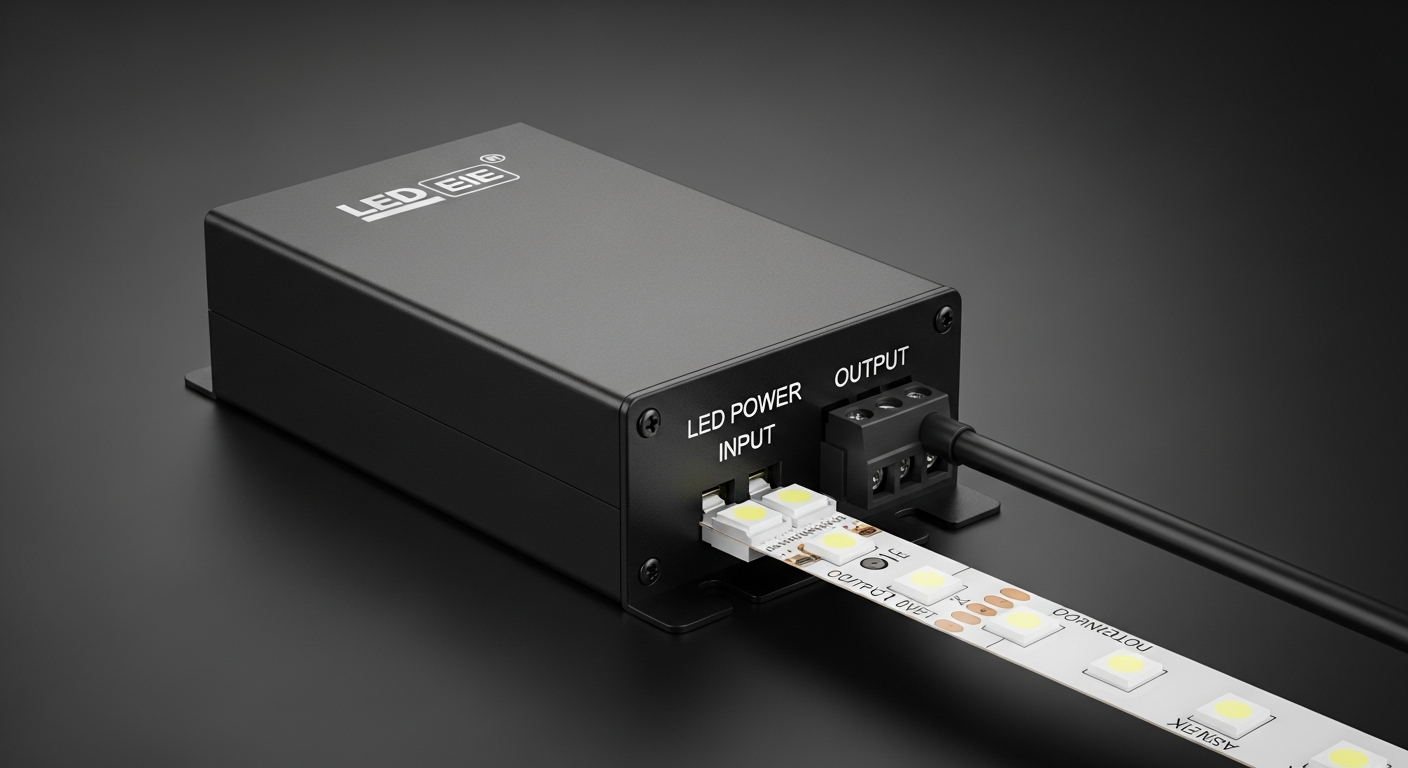
An LED power supply (also called an LED driver or LED transformer) converts household AC power (220V) into the low-voltage DC power that LED strips need. Most LED strips run on 12V or 24V DC, so the power supply’s job is to step down the voltage safely and stably.
A quality power supply keeps your LED strip running consistently, reduces flicker, and significantly extends the lifespan of the LEDs. Using a low-quality or undersized power supply is the leading cause of early LED failure and flickering issues.
Types of LED Power Supplies
1. Open Frame No housing — just exposed PCB. Designed to be installed inside a cabinet or enclosure with good airflow. Least expensive, but must be kept away from direct contact. Not suitable for areas where people can accidentally touch it.
2. Enclosed (Metal Cased) Aluminium housing for protection. The most common type for both indoor and general use. Can be installed inside or outside a panel. Safer and more versatile than open frame.
3. Waterproof (IP65–IP67) Sealed against water ingress. Required for outdoor installations, garden lighting, balconies, or wet areas. More expensive but necessary in the right environments.
4. Slim Profile Ultra-thin design for hiding inside tight spaces — inside cove profiles, under cabinets, or within false ceilings. Great for clean, hidden installations.
How to Choose the Right Power Supply
The core principle: your power supply wattage must be at least 20% above the total LED wattage.
Example: If your LED strips draw 50W, choose a power supply rated at 60W or higher (50W × 1.2 = 60W minimum).
Beyond that, check:
- Voltage match: Must match your LED strip exactly — 12V strip needs a 12V PSU, 24V needs 24V
- Brand reliability: A cheap, no-brand PSU can damage your LEDs; invest in quality
- Operating temperature: If installed in a warm, enclosed space, choose a PSU rated for higher temperatures
Key Buying Tips
24V is almost always better than 12V for runs longer than 5 meters — voltage drop is significantly lower. If your LED run exceeds 5 meters, strongly consider going 24V throughout.
For home installations, prioritize power supplies with overload, short-circuit, and over-voltage protection circuits. These safeguards protect both the PSU and your LED strips from damage.
Advice for First-Time Buyers
If you’re unsure what size to get, add up the wattage of all your LED strips and multiply by 1.2 to 1.3. A power supply that runs at 70–80% of its rated capacity will run cooler and last longer than one running at full capacity.
Never run a power supply at 100% load — it will overheat, degrade capacitors within months, and fail prematurely. Slightly over-sizing is always the right call.
Summary
The power supply is the heart of any LED strip system. Match the voltage, add a 20% safety margin, and choose a reliable brand. The small additional cost upfront will save you from having to replace your entire setup years earlier.
Browse Arum LED Power Supplies at arumstores.com/powersupply.